
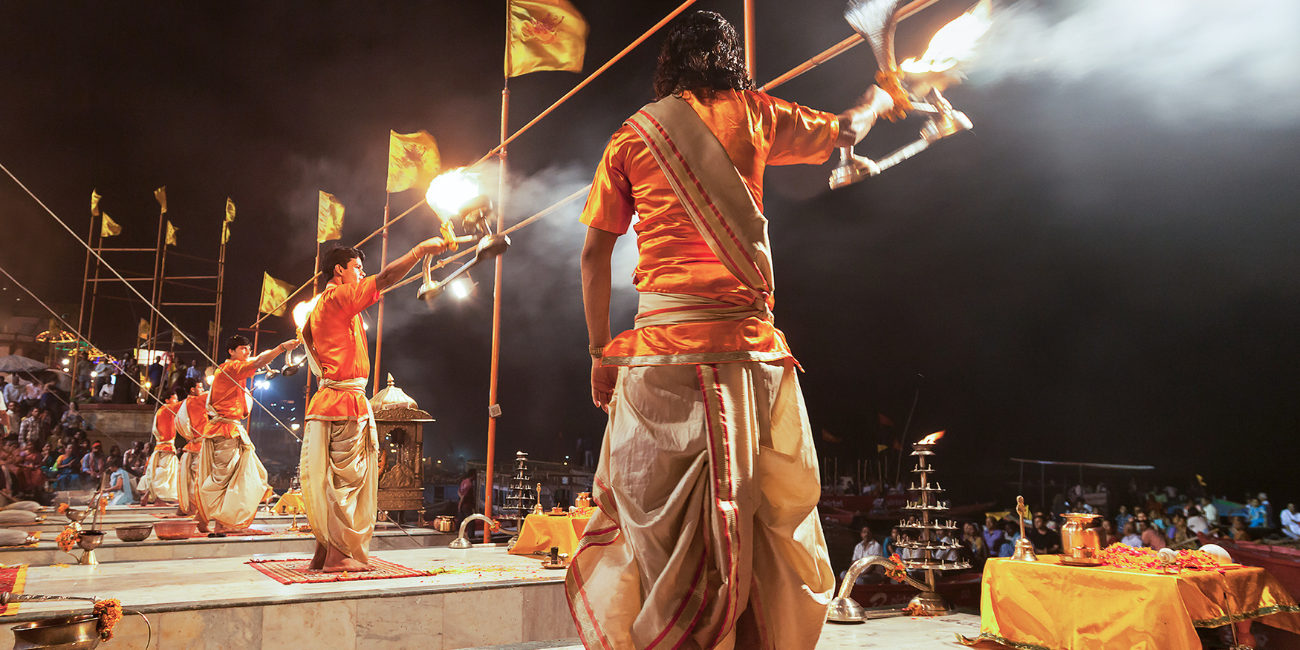
There is something about Varanasi that makes an ordinary evening feel extraordinary.
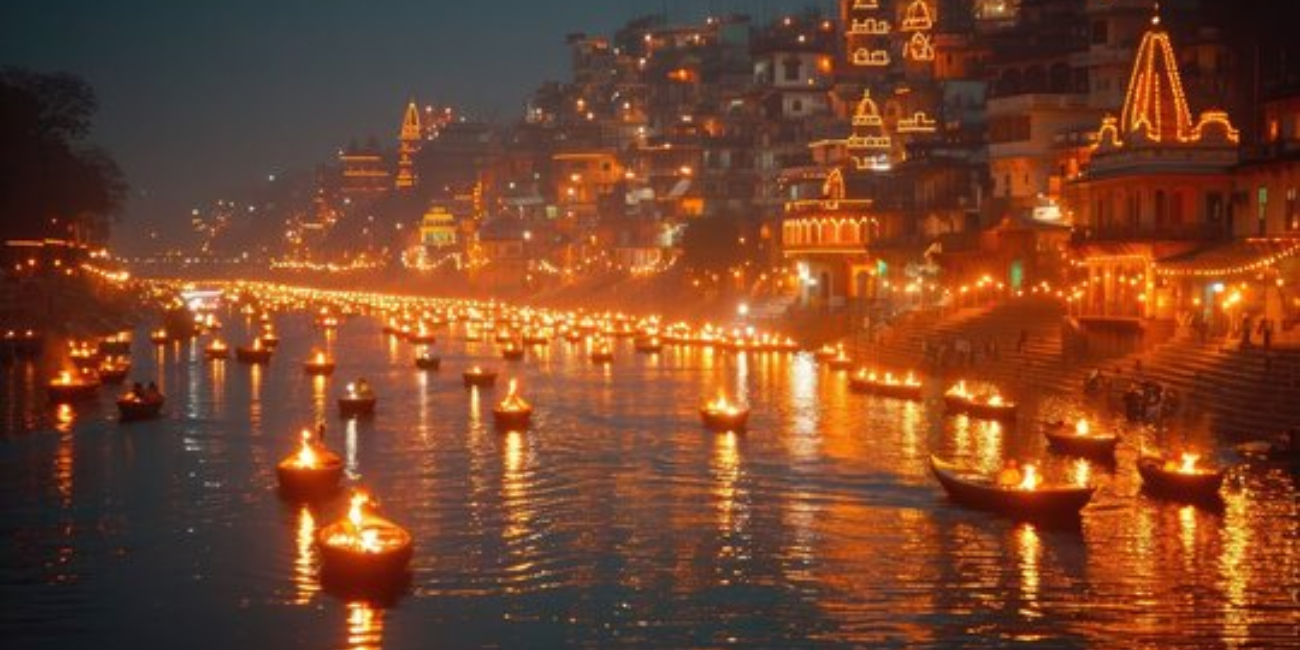
As the sun begins to set over the Ganga, the ghats slowly fill with visitors and devotees. Bells begin to ring, conch shells echo across the river, and priests prepare their lamps for the evening ritual. When the Aarti begins, rows of glowing lamps illuminate the riverfront, their reflections moving gently across the water.
This is the Ganga Aarti in Varanasi – a deeply spiritual evening ritual where devotion, music, light and the atmosphere of the Ganga come together.
If you are visiting Varanasi for the first time, knowing where and when to experience the Aarti can make your evening much easier to plan.
What Is Ganga Aarti in Varanasi?
Ganga Aarti is an evening prayer ceremony performed in honour of the River Ganga. It is an important Hindu ritual and one of the experiences most closely associated with the spiritual character of Varanasi.
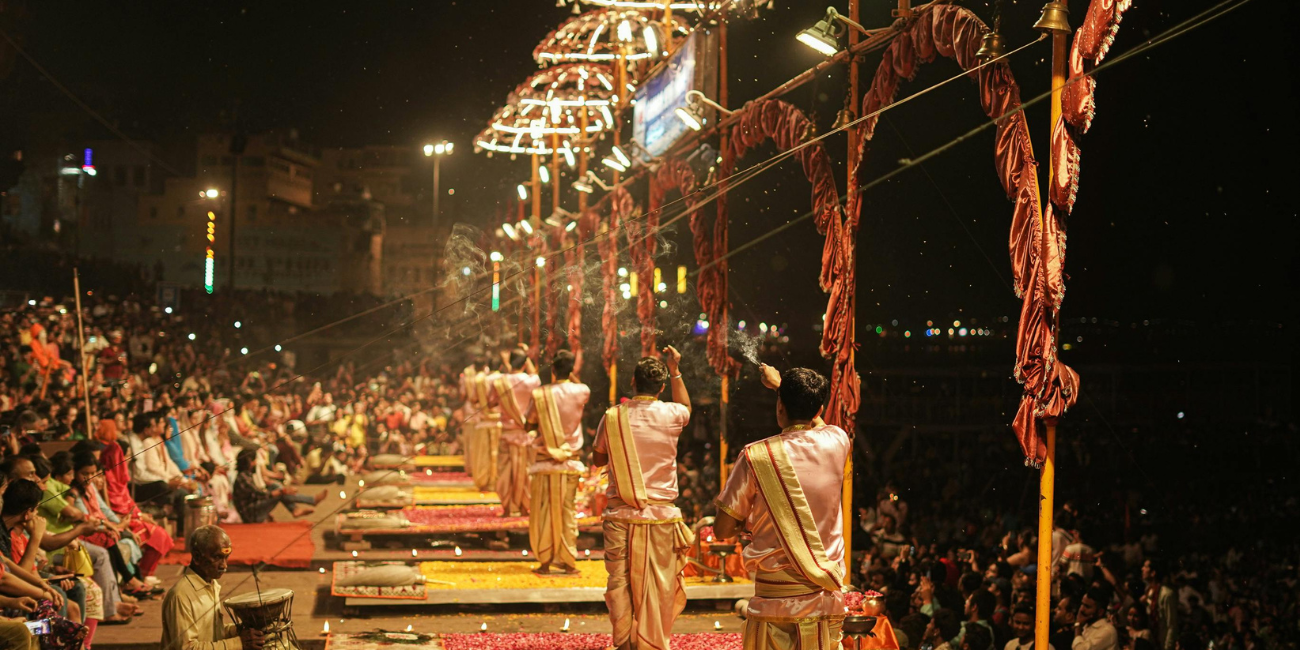
The ceremony brings together several elements of worship, including lamps, incense, flowers, conch shells, bells and devotional chants. At Dashashwamedh Ghat, the ritual is performed in a carefully coordinated sequence by the priests.
But the experience is about more than the ceremony itself.
You are surrounded by the old city, standing beside one of India’s most sacred rivers, with devotees offering prayers and the sounds of bells and chants spreading across the riverfront.
That combination of ritual and setting is what makes Ganga Aarti such a memorable part of a Varanasi visit.
Where Can You Watch Ganga Aarti in Varanasi?
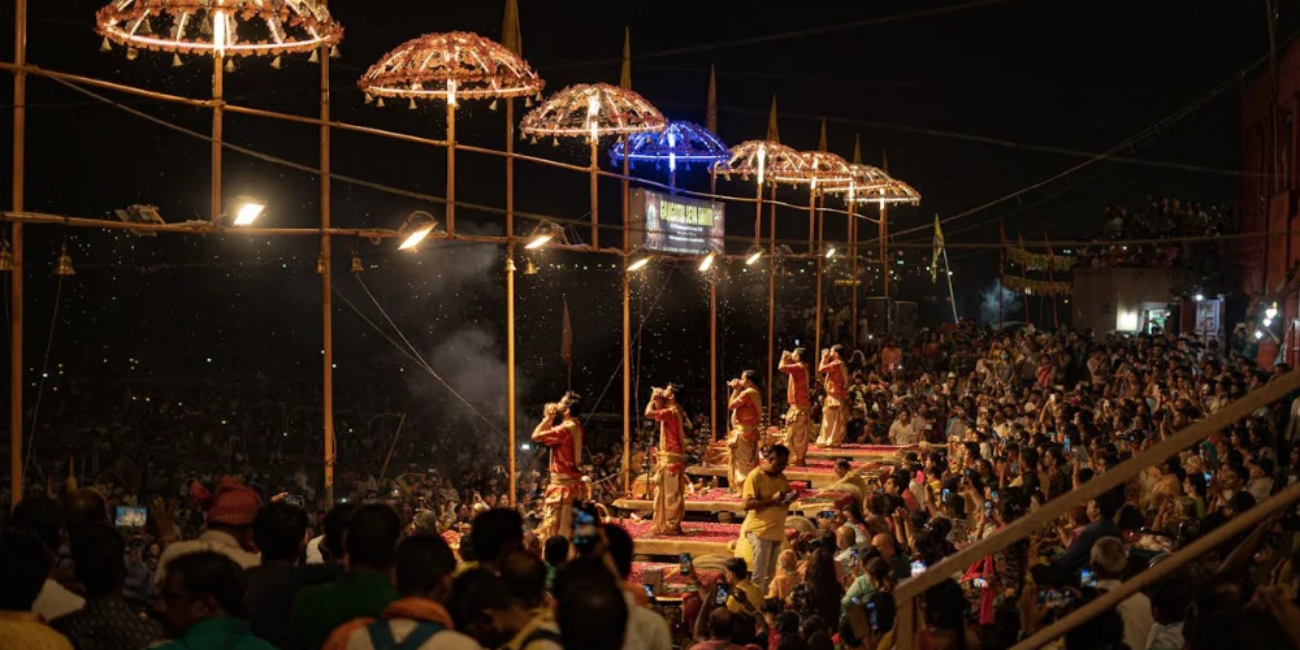
Ganga Aarti is performed at several ghats in Varanasi, but Dashashwamedh Ghat is the most famous place to experience the main evening ceremony.
Dashashwamedh Ghat
Located close to Kashi Vishwanath Temple, Dashashwamedh Ghat is known for its grand evening Ganga Aarti.
The ceremony generally takes place after sunset and lasts around 45 minutes. Because of its popularity, the ghat can become extremely crowded, particularly on weekends, holidays and during peak tourist periods.
If this is your first trip to Varanasi and you want to experience the city’s most iconic version of the evening Aarti, Dashashwamedh Ghat is the obvious choice.
Assi Ghat
If you prefer a comparatively relaxed atmosphere, Assi Ghat offers a different way to experience the spiritual side of Varanasi.
The ghat is particularly known for Subah-e-Banaras, a morning programme featuring activities such as devotional music, Vedic recitations, yoga and prayers. An evening Ganga Aarti is also performed here.
Compared with Dashashwamedh, Assi Ghat can feel less intense and more leisurely. It can be a good option if you want to spend time beside the river rather than being surrounded by a very large crowd.
Ganga Aarti Timings in Varanasi
The timing of the evening Aarti is linked to sunset, so it changes throughout the year.
Approximate timings commonly cited for the ceremony are:
- Summer: around 6:30 PM
- Winter: around 7:00 PM
However, these timings can vary depending on the season and the day’s sunset time.
For this reason, it is better to check the timing for your specific date of visit rather than relying only on a general schedule.
If you are planning to attend the Aarti at Dashashwamedh Ghat, arriving at least an hour before the ceremony is advisable.
How Early Should You Reach Ganga Aarti?
One of the easiest mistakes to make is arriving just before the ceremony begins.
Although the actual Aarti lasts around 45 minutes, preparations begin beforehand. As evening approaches, more people make their way towards the riverfront and finding a comfortable viewing position becomes increasingly difficult.
Arriving early gives you time to:
- Find a suitable viewing spot
- Walk through the surrounding lanes without rushing
- Take in the atmosphere around the ghat
- Avoid some of the last-minute crowd
- Settle in before the ceremony begins
During festivals and particularly busy periods, giving yourself additional time is even more useful.
Should You Watch Ganga Aarti From the Ghat or a Boat?
There is no right answer. The two options simply offer different perspectives.
- Watching From the Ghat
Being on the ghat puts you closer to the ceremony.
You can hear the bells and chants more clearly, watch the priests perform the rituals and experience the energy of the people gathered around you.
For first-time visitors who want to feel immersed in the ceremony, watching from the ghat can be particularly meaningful.
- Watching From a Boat
A boat gives you a completely different perspective.
From the Ganga, you can look back towards the illuminated ghats and see the Aarti as part of the larger Varanasi riverfront. The lamps, temple silhouettes, boats and evening sky come together to create a wider view that is difficult to get from the steps.
If you choose a boat ride, make sure you understand the price and arrangements beforehand.
What Happens During the Ganga Aarti?
The ceremony follows a sequence of prayers and offerings.
Conch shells are blown, bells are rung and devotional hymns fill the air. The priests perform coordinated movements with large brass lamps while incense, flowers and other offerings form part of the ritual.
One of the most striking moments comes when several lamps are raised together against the evening sky. Their light reflects across the surface of the Ganga while the sounds of bells and chants continue around the riverfront.
For many visitors, this is the moment that stays with them.
Yet the experience is not only about the lamps. It is also about the small details around you — the movement of boats on the river, people sitting on the steps, the sounds travelling across the water and the changing light of the evening.
Some experiences are simply better felt in person than captured through a camera.
Dashashwamedh or Assi Ghat: Which Should You Choose?
Both ghats are worth experiencing, but they offer different atmospheres.
|
Experience |
Dashashwamedh Ghat |
Assi Ghat |
|
Atmosphere |
Grand and energetic |
More relaxed |
|
Best known for |
Evening Ganga Aarti |
Subah-e-Banaras and evening Aarti |
|
Crowd |
Usually busier |
Generally calmer |
|
Best for |
First-time visitors wanting the iconic experience |
Travellers looking for a quieter setting |
|
Location |
Central old-city riverfront |
Southern stretch of the ghats |
If your main goal is to experience the famous evening Ganga Aarti, Dashashwamedh Ghat is the natural choice.
If you want a slower riverfront experience with a little more breathing space, Assi Ghat may suit you better.
Things to Know Before Attending Ganga Aarti
A little preparation can make your evening much more comfortable.
- Reach early: Popular viewing areas can fill up quickly.
- Wear comfortable footwear: Getting to the ghats often involves walking through narrow, crowded lanes.
- Keep your belongings secure: The riverfront can become very busy, so keep an eye on your valuables.
- Respect the setting: Ganga Aarti is a religious ceremony, not simply a tourist attraction. Be mindful while watching and photographing the ritual.
- Check the timing: The ceremony follows the changing sunset, so check the timing for your particular date.
- Consider a boat: If you want to see the illuminated ghats from the river, a boat can provide a memorable perspective.
- Be prepared for crowds: Dashashwamedh, especially, can become very busy during weekends, festivals and peak travel periods.
What Else Can You Explore Around Ganga Aarti?
One of the best things about attending Ganga Aarti is that it can easily become part of a larger Varanasi evening.
You can spend the day exploring temples and the old city’s narrow lanes before making your way towards the riverfront. The area around Kashi Vishwanath Temple and Dashashwamedh Ghat can also be incorporated into the same sightseeing plan.
And once the Aarti ends, there is no need to rush away immediately.
The atmosphere changes after the main ceremony. The lamps continue to glow, boats move slowly along the Ganga and the crowds gradually begin to disperse.
Sometimes, staying beside the river for a little longer is the best part.
Where to Stay During Your Varanasi Trip?
A full day exploring Varanasi can involve considerably more walking than you might expect.
There are temples to visit, narrow lanes to explore, ghats to discover and, of course, an evening by the Ganga. After a long day, having a comfortable place to return to can make a difference to the overall experience.
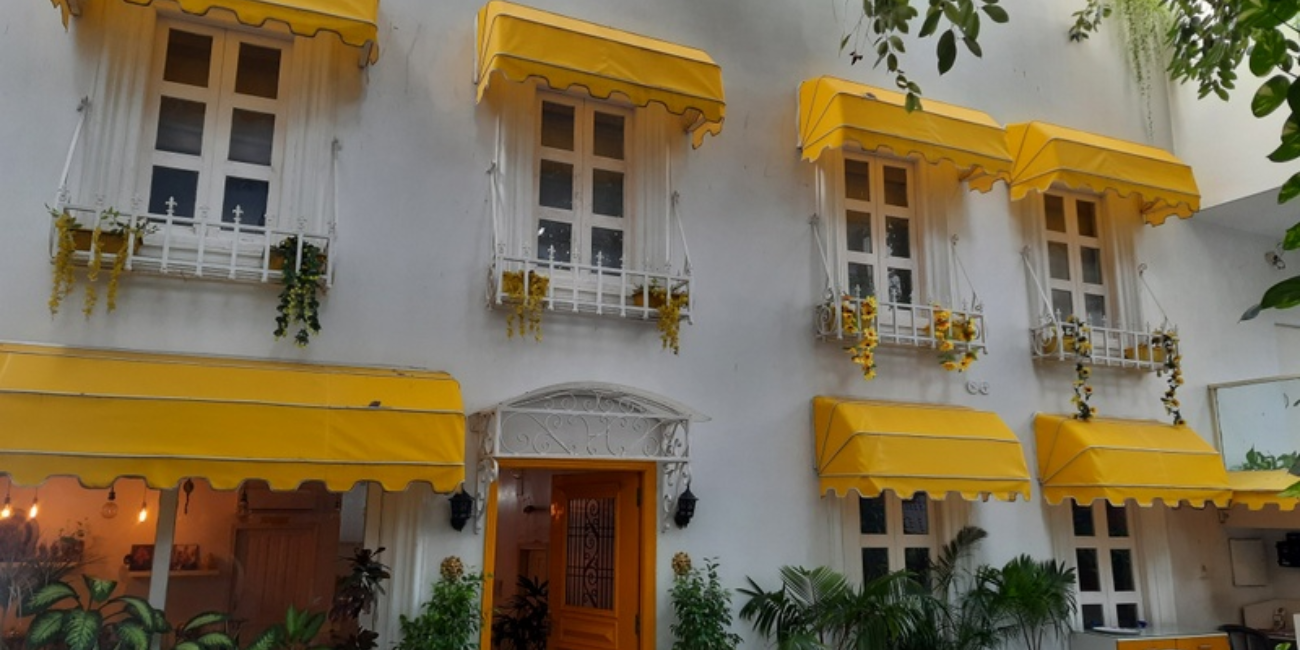
For travellers looking for accommodation with more character than a conventional hotel, Stay Banaras offers a heritage-inspired stay with modern comforts.
The property combines the character of a traditional residence with amenities designed for contemporary travellers. Its rooms have individual character, while the property also features a courtyard and the in-house restaurant, Behind Yellow Doors.
For visitors exploring Varanasi at their own pace, it can provide a comfortable base from which to experience the city.
Frequently Asked Questions About Ganga Aarti in Varanasi
What time does Ganga Aarti take place in Varanasi?
The evening Ganga Aarti generally takes place after sunset. Approximate timings are around 6:30 PM in summer and 7:00 PM in winter, although the actual timing can change with the season and sunset.
Where is the main Ganga Aarti held?
The most famous evening Ganga Aarti takes place at Dashashwamedh Ghat in Varanasi.
How early should I reach Dashashwamedh Ghat?
Arriving at least an hour before the ceremony is advisable, particularly during weekends, festivals and other busy periods.
Can I watch Ganga Aarti from a boat?
Yes. Watching the Aarti from the Ganga provides a wider view of the illuminated ghats and the riverfront.
Is Ganga Aarti performed at Assi Ghat?
Yes. An evening Aarti is also performed at Assi Ghat, which is additionally known for its Subah-e-Banaras morning programme.
Is Ganga Aarti held every day?
The main evening ceremony at Dashashwamedh Ghat is performed daily.
What is the best way to experience Ganga Aarti?
It depends on the kind of experience you want. The ghat offers a closer view of the ceremony, sounds and crowd, while a boat provides a wider perspective of the illuminated riverfront.
Experience the Evening Side of Banaras
There are many ways to experience Varanasi.
You can explore its temples, wander through its old lanes, try local food or take a boat ride along the Ganga. But as evening arrives and the lights begin to appear along the ghats, the city seems to reveal another side of itself.
Ganga Aarti is not simply another attraction to add to a Varanasi itinerary.
It brings together the river, the city, centuries-old traditions and the people who gather beside the Ganga every evening.
And perhaps that is why the experience stays with you long after the lamps have been lowered and the crowds have begun to disappear.
If you are looking for a stay that lets you explore Varanasi while still having a comfortable place to return to, Stay Banaras offers a home-away-from-home experience with the character of the city woven into the stay.